/PRODUCT%20IMAGES/WHITE%20EDGE-BANDING%20+%20BLACK%20SIDES/0001.jpg)
The hotel lobby is one of the most psychologically loaded spaces in architecture. It is the first thing a guest sees, the last thing they remember, and the environment that sets the tone for the entire stay. In the age of social media, it has also become the most photographed room in any hotel. The furniture in that room is not an afterthought — it is the room.
Yet most hotel lobbies are furnished with the same catalog pieces found in every other property in the same category. The same low-slung sofas, the same round accent tables, the same chairs that look vaguely midcentury and communicate nothing about the specific hotel, its location, or its brand. For a hospitality designer aiming to create a distinctive guest experience, catalog furniture is a ceiling, not a foundation.
This guide is for designers who want to do better. It covers why custom furniture matters in lobby design, what types of pieces create the most impact, how to think about materials and durability for high-traffic hospitality environments, and how the commissioning process works when you are ready to bring a vision to life.
Why Lobby Furniture Matters More Than You Think
Research in environmental psychology consistently shows that people form impressions of a space within seconds of entering it. In a hotel lobby, those first impressions map directly onto expectations about the property — the quality of the rooms, the level of service, the attention to detail. A lobby that feels generic signals a generic experience. A lobby that feels curated and intentional signals something worth paying attention to.
Furniture is the primary way guests physically interact with the lobby. They sit on it, set their bags beside it, gather around it. Unlike wall art or architectural features, furniture occupies the human scale — it exists at the height and proximity where people live. This makes it uniquely powerful as a design element.
The most Instagram-worthy hotel lobbies in the world share one thing in common: at least one piece of furniture that stops people in their tracks.
There is also the social media factor, which cannot be overstated. A striking piece of furniture in a lobby generates organic content. Guests photograph it, tag the hotel, and share it with audiences the hotel could never reach through paid advertising. A single sculptural bench can generate thousands of impressions per month at zero ongoing cost. The return on investment for a statement piece is not measured in comfort alone — it is measured in brand visibility.
What Makes Custom Better Than Catalog
Catalog furniture serves a purpose. It is available quickly, it is priced predictably, and it performs adequately. For a budget-limited project on a tight timeline, it makes sense. But for a property that positions itself as distinctive — a boutique hotel, a luxury resort, a design-forward brand — catalog furniture presents several limitations.
First, it is not unique. If a piece is in a catalog, it is available to every hotel in the world. Your competitor down the street can order the same bench, the same table, the same chair. Custom furniture, by definition, exists nowhere else. It is yours.
Second, it does not fit perfectly. Catalog pieces come in fixed dimensions. Your lobby comes in specific dimensions. The gap between the two — the awkward spacing, the piece that is slightly too long or too short for the alcove — is visible. Custom furniture is designed to the exact dimensions of your space, optimizing both aesthetics and traffic flow.
Third, it tells no story. A custom piece can embody the hotel's brand identity, reference the local landscape, or create a visual throughline that connects the lobby to the broader design concept. A catalog sofa tells the story of the catalog.
Types of Pieces That Transform Lobbies
Not every piece of lobby furniture needs to be custom. But the right statement piece — positioned at the right focal point — can transform the entire room. Here are the types of pieces that deliver the most impact in hospitality settings.
High-Impact Lobby Pieces
Sculptural Benches
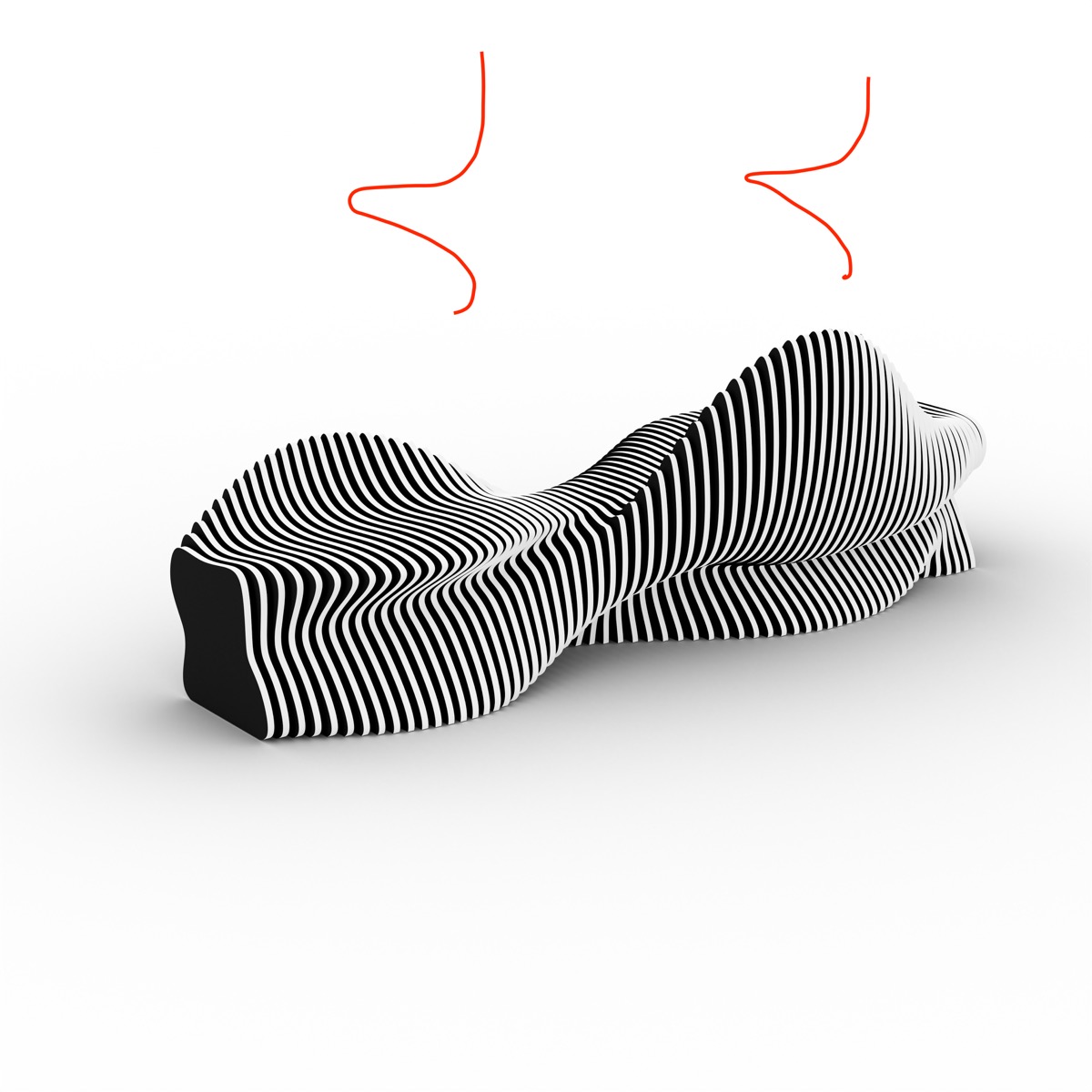
A bench is functional and photogenic. Placed at the center of a lobby or along a prominent wall, a parametric wave bench serves as both seating and sculpture. Guests use it, and they photograph it. The WAVES Bench V4, designed for larger spaces, works particularly well in open lobby environments where it can be viewed from multiple angles.
Wall Sculptures and Panels
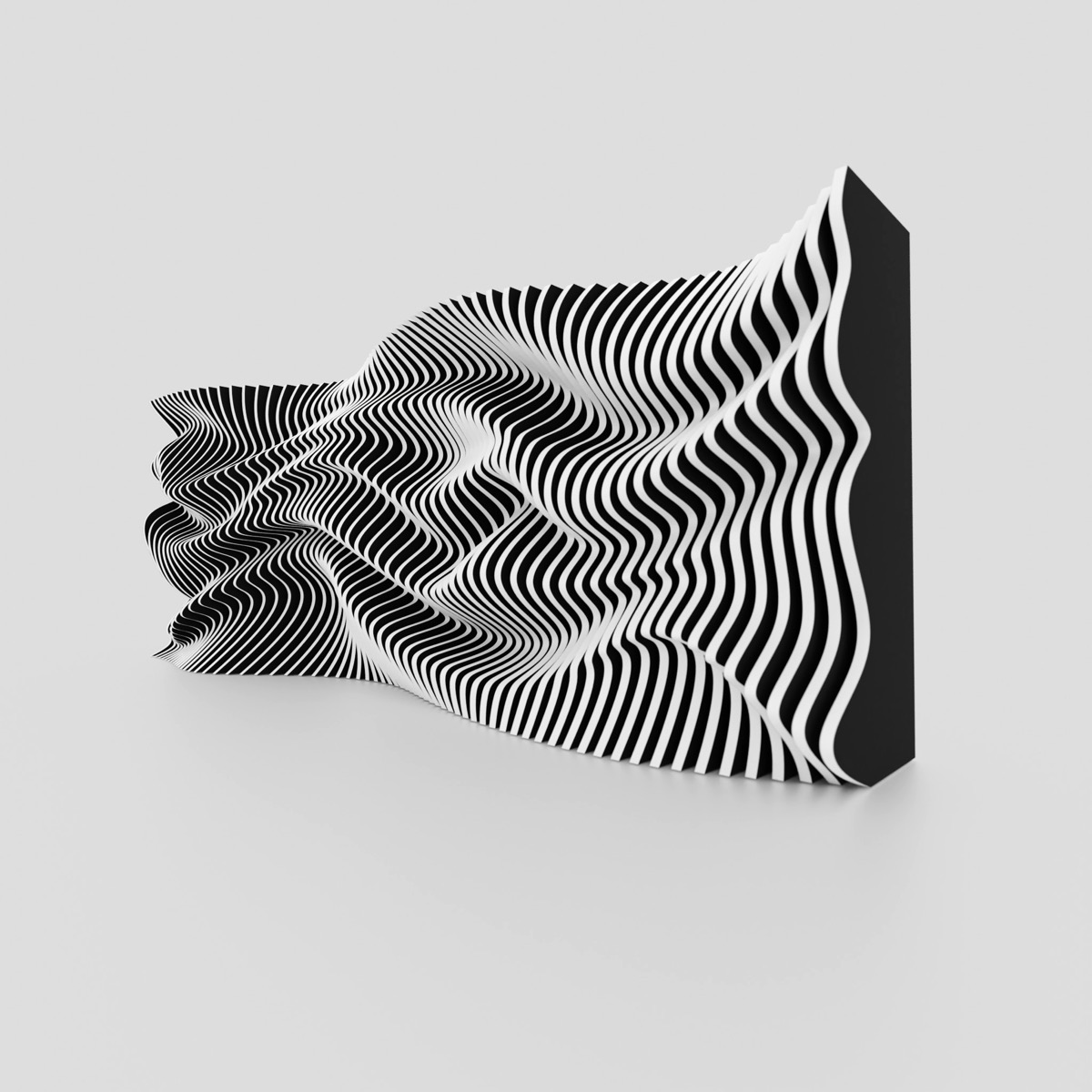
For lobbies where floor space is limited but wall real estate is abundant, parametric wall panels create visual depth without occupying square footage. A large-scale WAVES Panel installed behind the front desk becomes an instant focal point — visible from the entrance, dramatic in photographs, and unmistakably custom.
Statement Reception Desks
The front desk is the operational center of the lobby and the first point of human contact. A custom desk with a parametric facade transforms a functional counter into an architectural feature. It signals that this hotel cares about design down to the last detail.
Concierge and Lounge Pieces
Secondary seating areas — the concierge corner, the lounge adjacent to the bar, the quiet reading nook — benefit from custom pieces that reinforce the design language established by the primary statement piece. Smaller custom benches or accent tables in the same material palette create visual cohesion throughout the lobby.
Material and Finish Considerations for High-Traffic Environments
Hospitality environments are hard on furniture. A hotel lobby bench may see hundreds of uses per day, exposure to luggage, spills, cleaning chemicals, and the occasional high-heeled shoe. The materials and finishes that work in a residential setting are not always appropriate for commercial use.
At Kyle Buckner Designs, we approach hospitality commissions with durability as a non-negotiable baseline. Here is what that looks like in practice:
- Substrate selection: We use high-density engineered materials that resist warping, splitting, and dimensional change across temperature and humidity variations — conditions that are constant in lobby environments with automatic doors and HVAC systems.
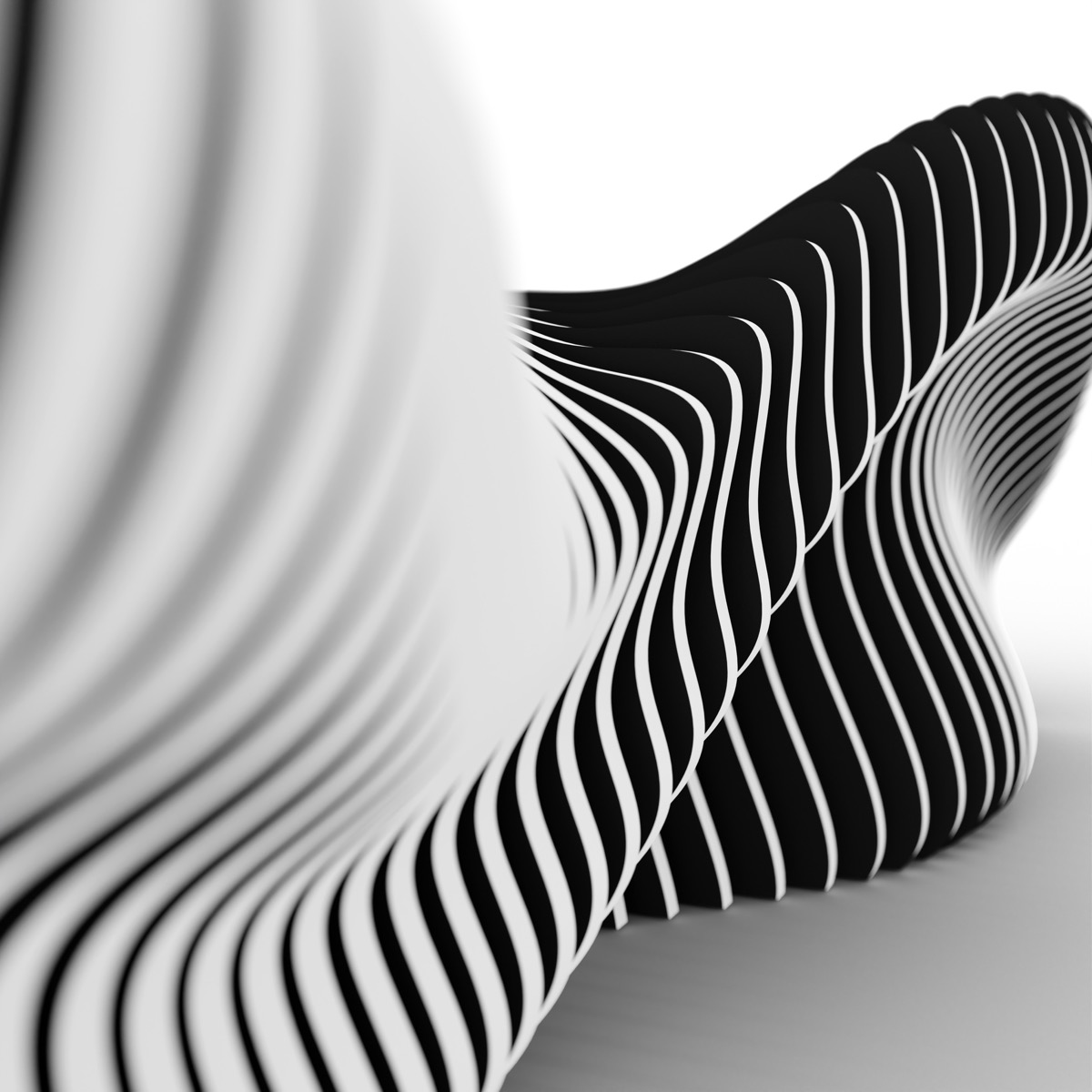
- Finish systems: Commercial-grade protective coatings rated for high-traffic use. Our hospitality finishes are resistant to scratches, stains, and common cleaning agents. They maintain their appearance under conditions that would degrade a residential-grade finish within months.
- Edge protection: Edges are the most vulnerable part of any furniture piece. Our edge-banding process uses industrial adhesives and durable edge materials that withstand repeated contact without chipping, peeling, or yellowing.
- Color stability: UV-stable finishes that resist fading from ambient light and window exposure — critical for lobby pieces positioned near glass facades.
- Structural engineering: Commercial-weight-rated construction. Our benches are engineered to support loads well beyond typical residential requirements, accounting for the unpredictable ways guests use lobby furniture.
/PRODUCT%20IMAGES/WHITE%20EDGE-BANDING%20+%20BLACK%20SIDES/0002.jpg)
Working with a Fabricator: The Commissioning Process
Commissioning custom furniture is different from placing a catalog order, and the process works best when both sides understand the workflow from the beginning. Here is how a typical hospitality commission unfolds with our studio.
1. Initial Consultation
The process starts with a conversation — not a purchase order. We want to understand the project: the hotel's brand identity, the lobby's dimensions and traffic patterns, the design concept, the budget range, and the timeline. Hospitality designers typically come to us with floor plans, mood boards, and material palettes already established. We work within that framework, not outside it.
2. Concept Development
Based on the consultation, we develop initial concepts — typically two to three parametric design directions, presented as 3D renderings placed within the lobby environment. These are not generic product shots; they are context-specific visualizations that show how the piece will look in your actual space, at the correct scale, with accurate lighting.
3. Design Refinement
Hospitality projects often involve multiple stakeholders — the interior designer, the hotel management company, the property owner, sometimes a brand standards team. We expect and welcome revision rounds. The parametric design approach makes this efficient: changing dimensions, wave intensity, or color configurations does not require starting over. Parameters adjust, and the entire design updates.
4. Material Sampling and Approval
Before production begins, we provide physical material and finish samples. For hospitality projects, this is non-negotiable. Screens lie. Photographs approximate. Only a physical sample tells you how the finish will look under your lobby's specific lighting, how it feels to the touch, and how the color relates to your existing material palette.
5. Production and Progress Updates
Once approved, production follows our standard process — parametric modeling, CNC cutting, laser detail work, hand assembly, finishing, and quality control. For hospitality clients, we provide regular progress updates with photographs at each major milestone. You will see your piece come together in real time.
6. Delivery and Installation
We coordinate delivery with your construction or renovation timeline. For properties within driving distance of our Danville, Virginia studio, we handle installation directly. For national projects, we work with specialized white-glove freight carriers and can coordinate with your on-site team for placement.
The best hospitality furniture does not just fill a space — it defines it. It gives guests something to remember, something to photograph, something that makes your lobby unmistakably yours.
Timeline and Project Planning
Hospitality projects operate on firm timelines — opening dates, renovation schedules, and seasonal deadlines do not move. We understand this and build our production schedule accordingly.
For a standard hospitality commission — a single statement piece like a lobby bench or wall sculpture — the typical timeline from consultation to delivery is 8 to 12 weeks. For larger scopes involving multiple pieces or highly custom designs, allow 12 to 16 weeks.
The most common source of delay in hospitality projects is not production — it is approval. The more stakeholders involved in the sign-off process, the longer the concept and refinement phases take. Our recommendation: involve us early. The earlier we start the consultation, the more time is available for revisions without compressing the production schedule.
Pieces That Work in Lobbies
From our current WAVES collection, several pieces are particularly well-suited to hospitality lobby environments:
- WAVES Bench V1 — The original. Its flowing wave pattern is dramatic but not overwhelming, making it versatile across lobby scales from intimate boutique properties to mid-size hotels. Available in multiple finish configurations.
- WAVES Bench V4 — Designed specifically for larger spaces. Its extended proportions and wider wave amplitude make it a natural centerpiece in grand lobby environments. Seats comfortably while functioning as sculpture.
- WAVES Panel V1 — A wall-mounted sculptural panel that adds parametric depth to the lobby without occupying floor space. Ideal for the wall behind a reception desk, a focal wall visible from the entrance, or a feature wall in a lounge area.
- WAVES Desk V1 — Adaptable as a reception desk facade or concierge station. The parametric wave front creates visual interest at the point of first guest contact.
Every piece in the collection can be customized in dimensions, finish, and wave parameters to suit the specific requirements of a hospitality project. We also create fully bespoke designs from scratch for properties that want something entirely unique.
/PRODUCT%20IMAGES/WHITE%20EDGE-BANDING%20+%20BLACK%20SIDES/0003.jpg)
The Investment
Custom parametric furniture for hospitality environments is a considered investment. Our pieces range from $5,000 to $16,000 depending on scale, complexity, and finish requirements. Fully custom commissions with unique parametric designs may fall outside this range based on scope.
Viewed against the lifespan of a quality custom piece — typically 15 to 20 years or more — and the brand value it generates over that period, the cost per year is remarkably modest. It is almost certainly less than a single month's spend on digital advertising, yet it works continuously, creating impressions 24 hours a day, every day, for the life of the piece.
Next Steps
If you are a hospitality designer, interior architect, or hotel developer considering custom furniture for a lobby project, we would welcome the conversation. No hard sell, no obligation — just a discussion about your project, your timeline, and whether what we do is a fit for what you need.
You can explore our hospitality-specific portfolio, or reach out directly to start the conversation.
Planning a Hospitality Project?
See our work for hotels, restaurants, and commercial spaces — or start a conversation about your project.