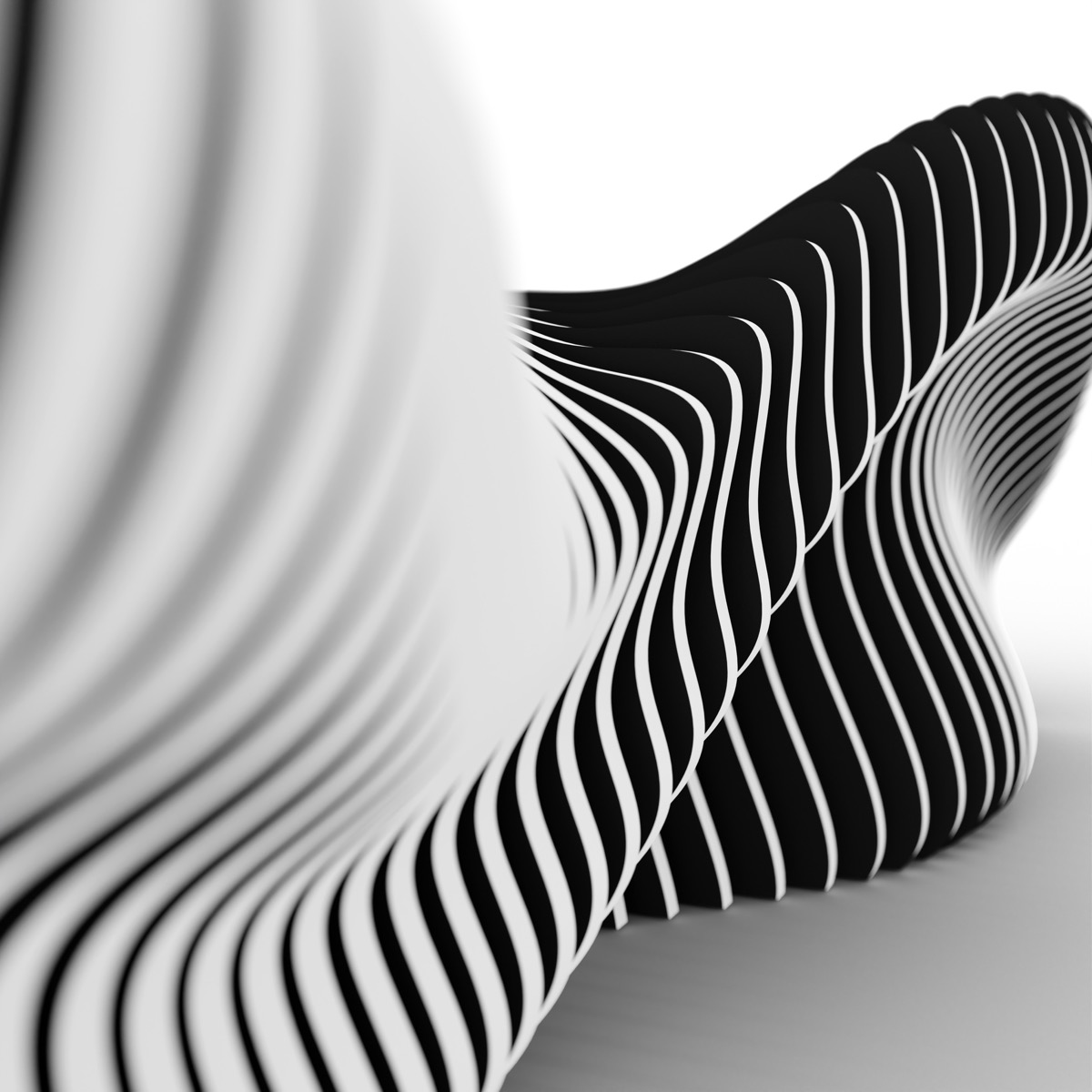
When people first see one of our WAVES benches in person, the reaction is almost always the same: they reach out and touch it. They run their fingers along the ridges, trying to understand how the curves were formed. Then they ask the question we hear most often: how is this made?
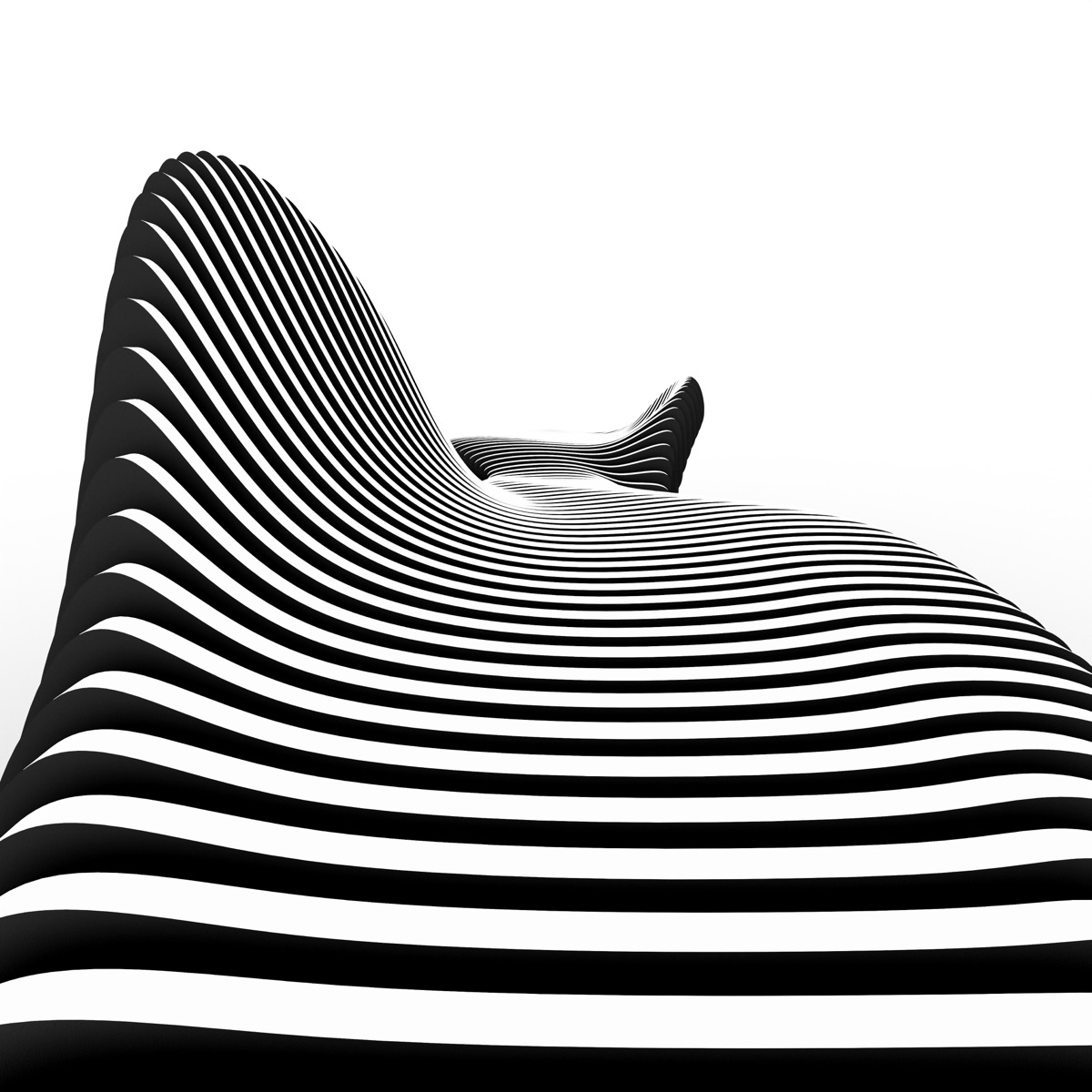
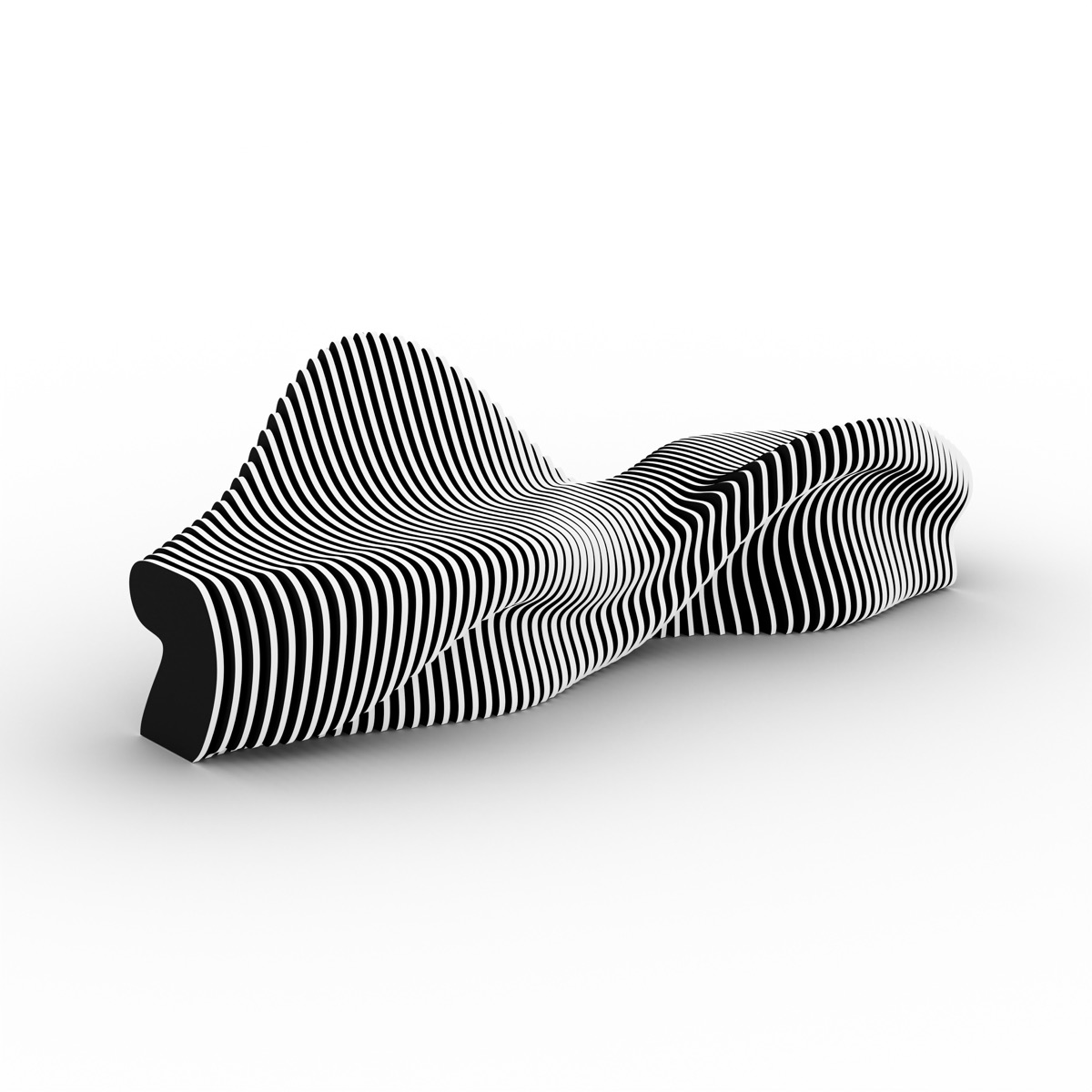
It is a fair question. A parametric wave bench does not look like anything you would find in a standard furniture catalog. The flowing, organic curves seem almost impossible to produce from a rigid material like wood. There are no visible joints, no obvious seams, and the wave pattern appears to ripple continuously from one end to the other — as if the wood itself were liquid, frozen mid-motion.
The truth is that every WAVES bench is the product of a process that bridges two very different worlds: computational design and hands-on craftsmanship. What begins as mathematical code on a screen ends with hours of sanding by hand in our workshop in Danville, Virginia. This article walks through every phase of that process, from the first line of code to the finished piece leaving our studio.
What is Parametric Design?
Before we get into the physical making, it helps to understand the design philosophy driving the work. Parametric design is a method in which the form of an object is not drawn by hand but generated through a set of rules and parameters. Instead of sketching a curve and hoping it looks right, we define relationships — mathematical equations that describe how the surface should undulate, at what frequency, with what amplitude, and how those values change across the length and width of the piece.
Think of it this way: traditional furniture design is like painting a picture. Parametric design is like writing a recipe. Change one ingredient — increase the wave amplitude by 15%, tighten the frequency by a factor of two — and the entire form recalculates. Every slat, every angle, every curve updates simultaneously. This means we can explore hundreds of variations in minutes, dialing in exactly the right proportion of drama and subtlety before committing a single sheet of material to the machine.
The parametric approach is what gives our WAVES collection its organic, flowing character. No two variations are identical, because each design is tuned to its intended environment — a wider, gentler wave for a meditative lobby, a tighter, more energetic pattern for a retail activation.
Phase 1: Digital Design and 3D Modeling
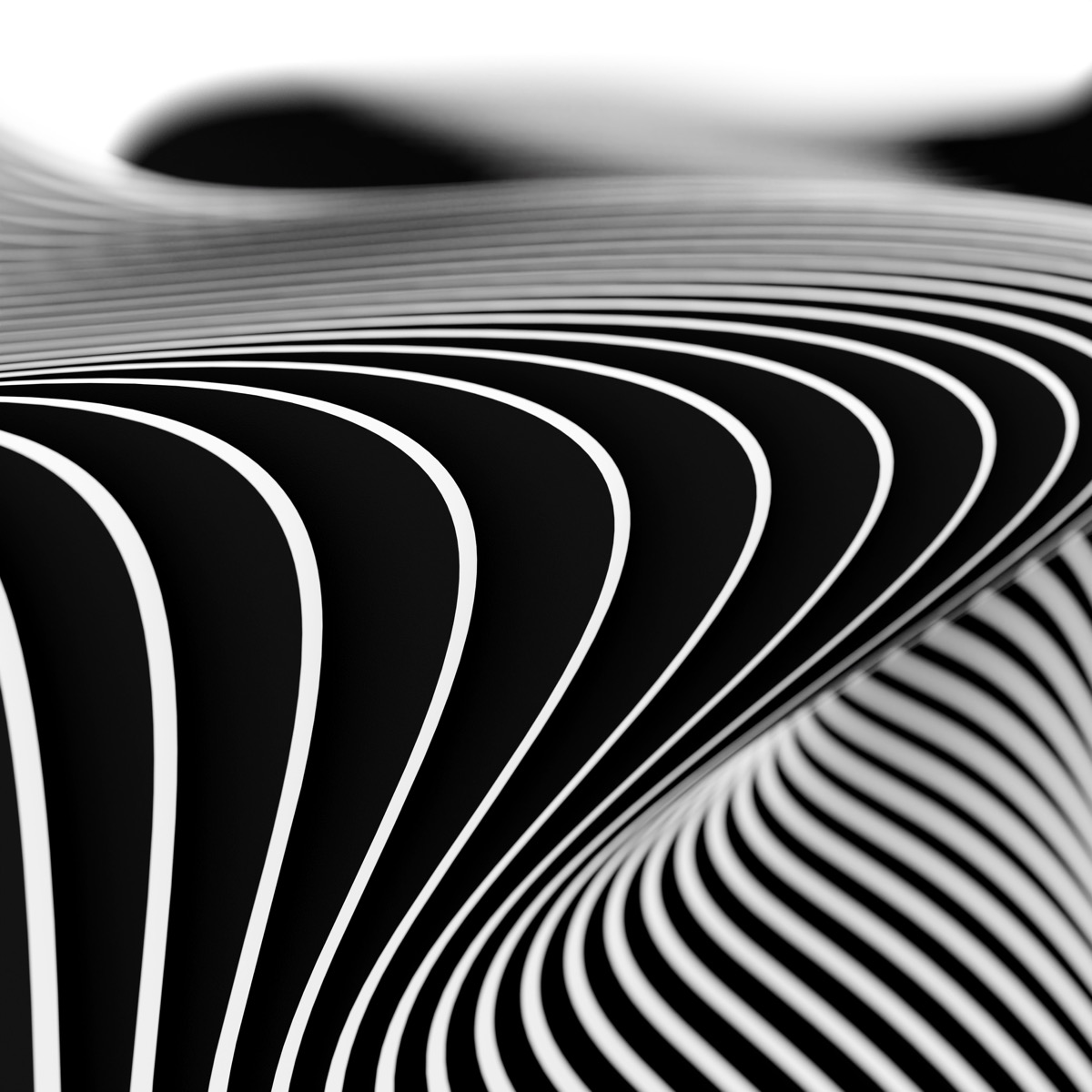
Every bench begins on screen. We work in specialized parametric modeling software that allows us to define a surface as a series of mathematical curves, then slice that surface into hundreds of individual cross-sections — each one a unique profile that will eventually become a physical slat of wood.
The design phase is iterative. We set the overall dimensions (length, width, height, seating depth), define the wave parameters, and then spend time refining. The software gives us a full 3D preview, complete with realistic material rendering, so we can evaluate the piece from every angle before anything is cut.
For a standard WAVES Bench V1, the model typically generates between 150 and 300 individual slats, each one a slightly different shape. The software numbers and labels every slat, calculates the precise spacing between them, and generates the cutting files that our CNC machine will follow. This digital precision is what makes the smooth, continuous wave effect possible — if even a few slats were out of order or slightly miscut, the illusion would break.
Phase 2: CNC Cutting
Once the design is finalized and approved, we move to fabrication. The cutting files are loaded into our CNC (Computer Numerical Control) router, a machine that follows the digital path with extreme accuracy, cutting each slat from sheet material to within fractions of a millimeter.
CNC cutting is the backbone of how parametric furniture is made. The machine reads each slat's unique profile from the digital file and cuts it precisely. For a single bench, this can mean hours of continuous cutting — each slat emerging from the sheet material as its own distinct shape, labeled and ready for assembly.
The material choice matters enormously at this stage. We typically work with high-density MDF or premium plywood, selected for consistency, structural integrity, and the ability to take a flawless finish. Every sheet is inspected before it goes on the machine — any warping, delamination, or inconsistency would compromise the final wave pattern.
A bench that looks fluid and effortless is, in reality, an assembly of hundreds of individually machined components — each one unique, each one essential.
After the CNC does its work, we are left with stacks of slats — sometimes filling an entire table. Each one is labeled with its position number. If you were to lay them out in order, you would see the wave pattern emerge, one cross-section at a time, like frames of an animation.
Phase 3: Laser Cutting for Detail Work
Not every component can be cut on the CNC. Some details require even finer precision — thin edge profiles, alignment markers, decorative inlays, or structural inserts. For these, we use a laser cutter.
The laser operates at a much finer resolution than the CNC router, capable of cutting intricate shapes and engraving details that would be impossible with a spinning bit. On certain bench designs, laser-cut elements serve as internal spacers — thin pieces that sit between the main slats to maintain exact spacing throughout the wave. These invisible components are critical to the structural integrity and visual consistency of the finished piece.
The combination of CNC and laser technology is what allows us to achieve both the large-scale sculptural form and the fine-grained detail that characterizes every WAVES piece.
Phase 4: Hand Assembly
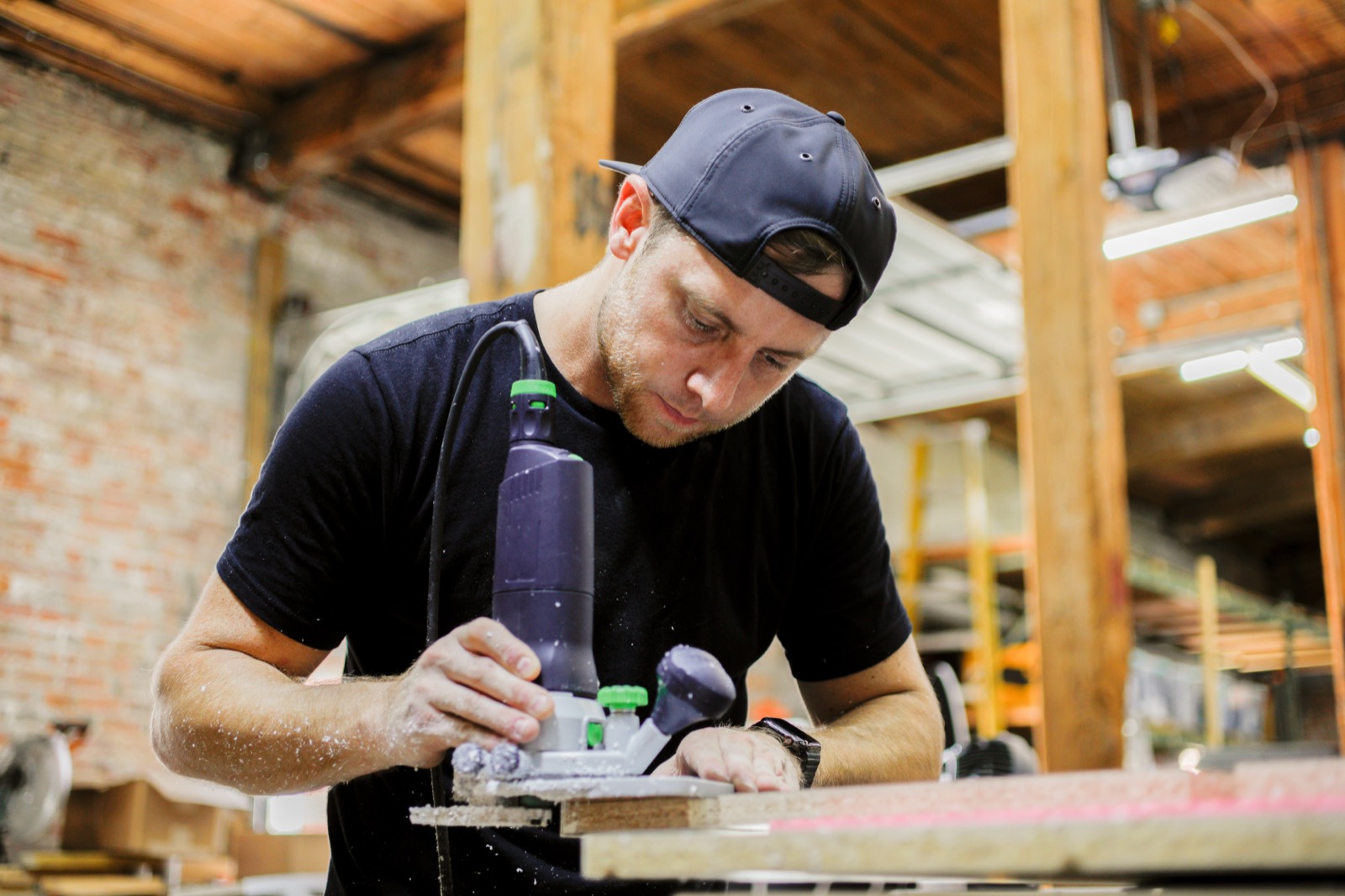
This is where the bench truly comes to life — and where the process becomes deeply physical. With hundreds of individually cut slats laid out across our workbenches, assembly begins.
Each slat is positioned in its exact numbered sequence, aligned using precision jigs and spacers, then bonded with industrial-grade adhesive. The process is methodical and painstaking: every slat must be perfectly parallel, perfectly spaced, and perfectly aligned with its neighbors. A deviation of even one or two millimeters would break the wave pattern and create a visible flaw in the surface.
For larger benches, we assemble in sections. Each section is clamped under heavy pressure while the adhesive cures — a process that typically takes 24 hours per section. The clamps exert thousands of pounds of force, ensuring every joint is tight and every surface is flush.
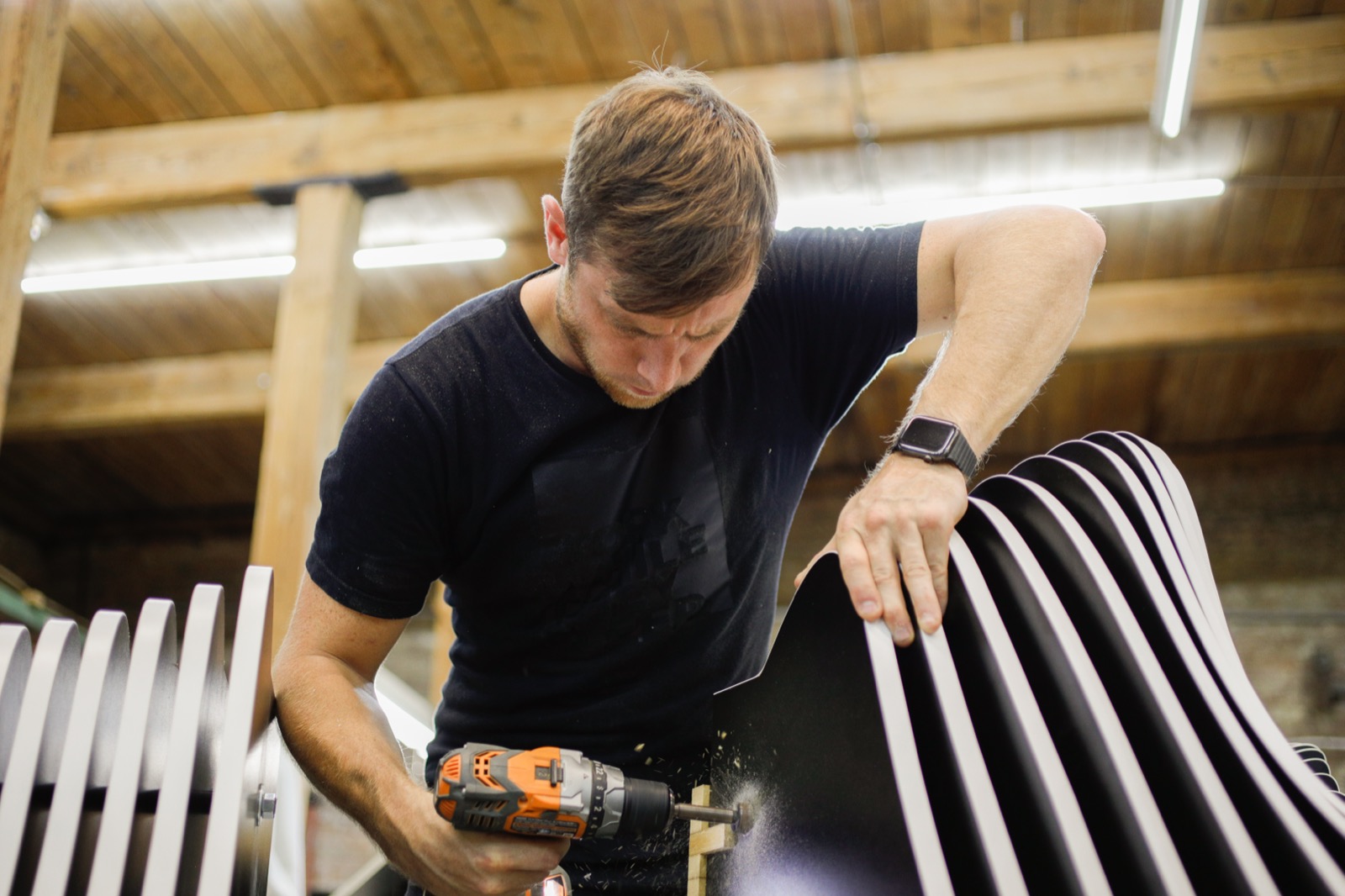
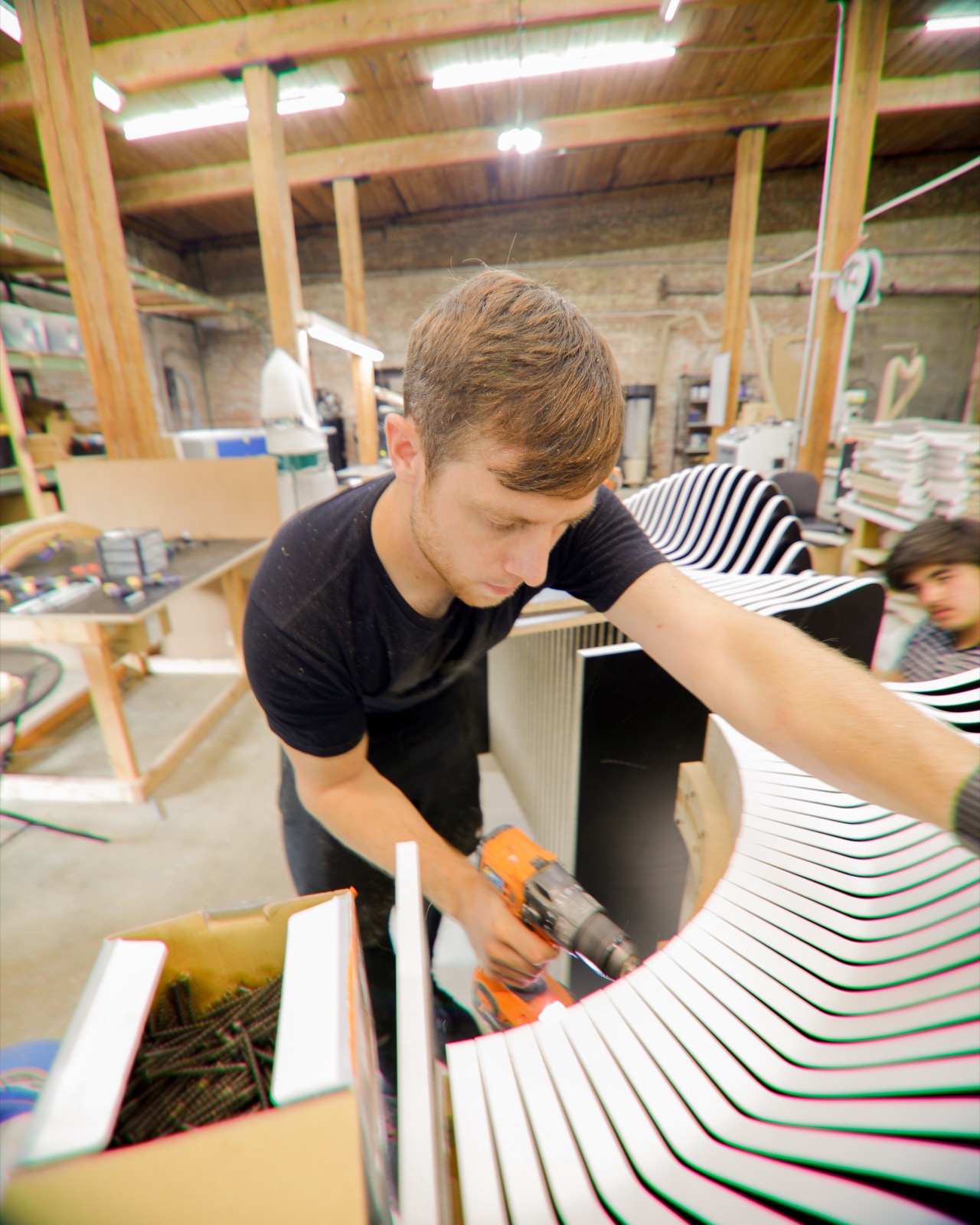
Once all sections are assembled and cured, they are joined together to form the complete bench body. This final joining is a critical moment — the wave pattern must flow seamlessly across the seams. We test-fit everything dry before committing to the final bond.
Hand assembly is by far the most time-intensive phase. Depending on the size and complexity of the bench, it can account for 40 to 60 percent of the total build time. It is also the phase that demands the most skill and experience. Machines cut with precision, but it takes a trained hand to feel when a slat is sitting right, when a surface is truly flat, when the curve is flowing the way it should.
Phase 5: Sanding and Surface Preparation
With the structure assembled, the bench enters the finishing phase — and sanding is where we spend the most time. The raw assembled bench has a tactile, ridged surface where each individual slat creates a subtle step. Depending on the design intent, we may leave some of this texture to emphasize the parametric layering, or we may sand portions smoother for seating comfort.
We begin with coarse grits to remove any adhesive squeeze-out and level any minor inconsistencies. Then we progress through increasingly fine grits — 120, 180, 220, 320 — until the surface is silky to the touch. The ends and edges receive special attention, as these are the profiles most visible to the eye.
Between sanding passes, we inspect the entire surface under raking light — a technique where we shine a bright light at a low angle across the surface to reveal any imperfections invisible to the naked eye. Any dips, ridges, or scratches are addressed before we move on.
Phase 6: Edge-Banding and Finishing
The finish is what gives each WAVES bench its distinctive color identity. Our most popular configuration — white edge-banding with black sides — creates a striking tuxedo effect that emphasizes the wave pattern from the front while grounding the piece with dark, receding sides.
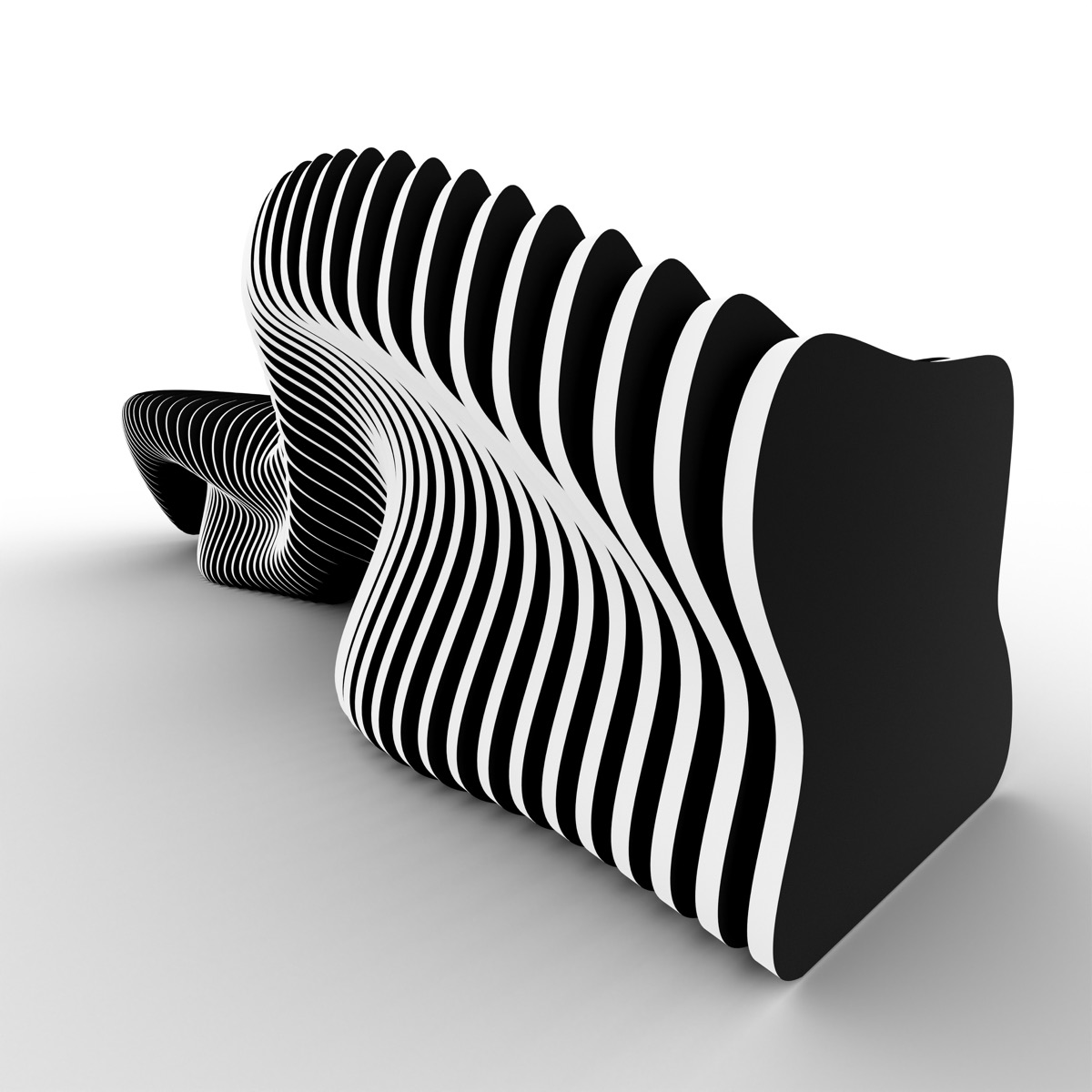
The edge-banding process is done by hand. Each visible edge of each slat receives a strip of material, carefully applied, trimmed, and flushed. On a bench with 200 slats, that can mean hundreds of individual edge-banding applications — each one trimmed to perfection.
After edge-banding, we apply the side finish. Whether it is matte black, natural wood, or a custom color specified by the client, the finish is built up in multiple thin coats with light sanding between each coat. This multi-layer approach creates depth and durability.
The final step is a protective topcoat — a clear, hard-wearing finish that protects the piece from daily wear while preserving the visual depth of the color underneath. For commercial installations, we use enhanced protective coatings rated for high-traffic environments.
Phase 7: Quality Control
Before any bench leaves the workshop, it goes through a thorough quality control inspection. We check every surface for finish consistency, examine every edge for clean banding, test structural integrity by applying load beyond the rated capacity, and verify all dimensions against the original design specifications.
We photograph the completed piece from multiple angles — these images serve both as documentation and as the product photography you see on our site. What you see in the gallery is the actual finished piece, not a digital rendering.
Any imperfection, no matter how small, is addressed before the piece is cleared for delivery. Our standard is simple: if we would not put it in our own home, it does not leave the workshop.
Phase 8: Packaging and Delivery
Packaging a sculptural piece of furniture is an art in itself. Each bench is wrapped in soft protective material, then crated in custom-built wooden crates designed to withstand the rigors of freight shipping. Corner protectors, foam inserts, and shock-absorbing materials ensure the piece arrives in exactly the condition it left our workshop.
For local deliveries in the Danville, Virginia area, we handle installation personally — placing the piece exactly where it belongs and ensuring the client is fully satisfied. For national and international shipments, we work with white-glove freight carriers who specialize in fine furniture and art.
Every delivery includes care instructions, a certificate of authenticity, and direct contact information for our studio — because our relationship with the client does not end when the piece is delivered.
The Timeline: What to Expect
One of the most common questions we hear is about timeline. The honest answer is that it varies based on the piece, the complexity of any customizations, and our current production schedule. Here is a general breakdown:
Typical Production Timeline
Standard collection pieces typically ship within 3 to 6 weeks. Fully custom commissions with unique dimensions, finishes, or design modifications may require 8 to 12 weeks. We provide progress updates with photos at each major milestone so you can follow your piece from code to completion.
Why the Process Matters
In a world of mass-produced furniture, the process behind each WAVES piece is what sets it apart. Every bench is a convergence of computational precision and human intuition — a design born in code and brought to life by hand. The wave pattern is not decorative veneer applied to a standard form; it is the form itself, generated mathematically and realized physically, one slat at a time.
When you run your hand across the surface of a finished bench and feel those subtle ridges — each one the edge of an individually cut slat — you are touching the evidence of that process. It is parametric design you can feel.
Ready to See the Collection?
Browse the full WAVES lineup or start a conversation about a custom commission.